Tis the Season Holiday Embroidery Review
As an experienced embroidery designer, I spend my days evaluating digital assets not just for their aesthetic appeal, but for their commercial viability. When a small business owner, Etsy seller, or apparel decorator asks me to review a design like Tis the Season Holiday Embroidery, they are looking for more than just a pretty picture; they need a reliable asset that translates seamlessly from screen to stitch. This review focuses on how this specific design performs in real-world business applications, from branded patches to custom apparel and holiday merchandise.
First Impressions and Visual Personality
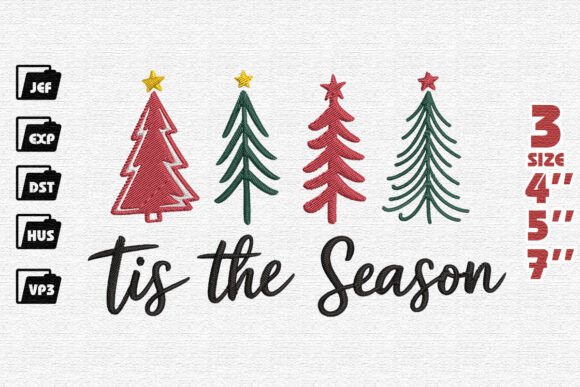
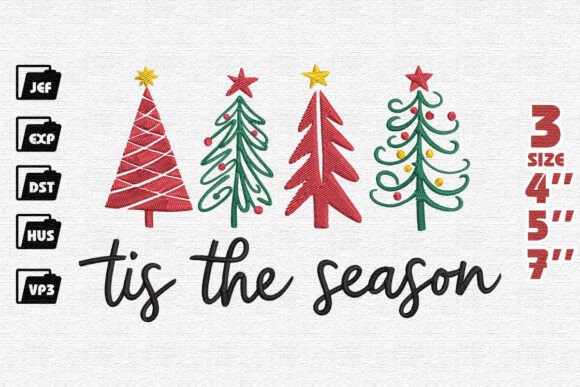
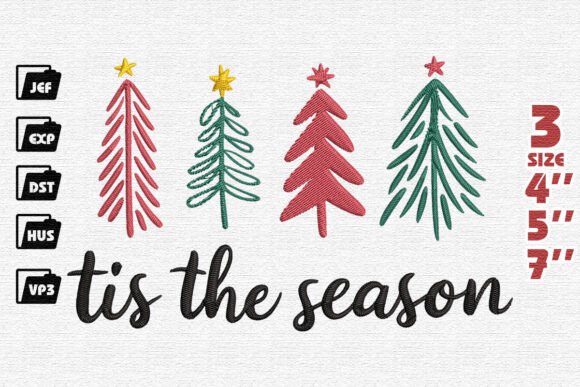
The title Tis the Season Holiday Embroidery immediately suggests a classic, festive tone. In the world of machine embroidery, titles often hint at the visual style. Based on the description stating it will look fantastic on Christmas gifts, this design likely leans towards a warm, traditional aesthetic rather than a hyper-modern or abstract interpretation. For small business owners, this is a crucial distinction. A rustic or handmade feel works exceptionally well for boutiques, bakeries, florists, and craft studios, as it reinforces the narrative of artisanal quality.
From a professional standpoint, the immediate concern is whether the design feels premium or cluttered. High-quality holiday designs must balance detail with clarity. If the design relies too heavily on intricate outlines or tiny text, it risks losing definition when digitized. However, if the design utilizes bold shapes and clear negative space, it becomes a versatile tool for branding. The phrase "It will look fantastic" implies a strong visual impact, suggesting that the design has enough weight to stand out on fabric without requiring excessive thread usage or complex color changes.
Real-World Business Applications
The true test of any machine embroidery design is its adaptability across various product lines. Tis the Season Holiday Embroidery offers significant potential for small business merch and branded patch use. Here is how it can be integrated into different commercial streams:
- Embroidered Patches: One of the most profitable uses for this design is creating iron-on or sew-on patches. Small businesses can sell these as collectible items or attach them to customer orders as a value-add. The design’s likely sturdy structure makes it ideal for patch borders, ensuring durability during shipping and wear.
- Staff Uniforms and Aprons: For cafes, bakeries, and retail boutiques, seasonal staff uniforms boost team spirit and brand visibility. Placing Tis the Season Holiday Embroidery on chest pockets or apron bibs adds a touch of professionalism while celebrating the holidays. It transforms standard workwear into branded marketing tools.
- Caps and Headwear: Cap embroidery requires designs that fit within curved hoops and maintain readability from a distance. If this design features a central focal point with balanced symmetry, it serves as an excellent cap front logo. It allows brands to offer limited-edition holiday hats that drive impulse purchases.
- Tote Bags and Product Packaging: Eco-friendly tote bags are staples for handmade brands. A well-executed embroidery design on canvas or cotton totes elevates the perceived value of the bag itself. Furthermore, using the design as a label accent on product packaging—such as gift boxes or wrapped goods—creates a cohesive unboxing experience that encourages social media sharing.
- Etsy Branding and Digital Assets: For digital sellers, having a high-quality embroidery file allows for the creation of printable mockups. These mockups help customers visualize the final product, reducing return rates and increasing buyer confidence. The design can also be offered as part of a bundle, increasing average order value.
Strategic Considerations and Limitations
While the design shows promise, a professional review must address where caution is required. Not every surface or application is suitable for every digitized pattern. Understanding these limitations prevents costly production errors and protects your brand reputation.
Size and Detail Constraints: If Tis the Season Holiday Embroidery contains fine details or tiny lettering, it may not render clearly at small patch sizes (e.g., under 2 inches). Tiny elements can merge together, creating a muddy appearance. Similarly, on curved surfaces like caps, tight curves in the design might distort if the digitization does not account for the curvature properly. Always inspect the spacing between elements to ensure they remain distinct after stitching.
Fabric and Texture Compatibility: Embroidery interacts differently with various materials. On textured fabrics like heavy wool or loose-weave burlap, the design may sink in or lose definition. Conversely, on smooth cotton or polyester blends, the stitches will pop. Dark uniforms present another challenge; if the design relies on light thread colors for contrast, you may need a dense underlay or white backing to prevent show-through. Testing on the actual fabric type is non-negotiable before bulk production.
Durability and Washing: Merchandise intended for frequent washing, such as aprons or work shirts, requires robust construction. Designs with high stitch density can become stiff and uncomfortable if over-stitched. Ensure the design uses appropriate stabilizer techniques to prevent puckering, which can ruin the professional look of the finished product.
Impact on Brand Identity and Customer Trust
In the competitive landscape of small business merch, visual consistency is key. Using a cohesive design language builds brand identity and fosters customer trust. When a customer receives a gift or wears a uniform featuring Tis the Season Holiday Embroidery, they are engaging with the brand’s personality. A well-detailed, clean design signals professionalism and attention to detail, enhancing the perceived value of the product.
Furthermore, holiday-themed merchandise often drives emotional connections. Customers are more likely to share photos of unique, beautifully crafted items on social media. By offering high-quality embroidered goods, you encourage user-generated content, which serves as powerful organic marketing. The design becomes a tangible representation of your brand’s care and creativity, strengthening buyer engagement and loyalty.
Practical Designer Notes for Production
To ensure the best results when incorporating this design into your workflow, consider the following technical steps:
- Black and White Test: Before committing to thread colors, view the design in black and white. This helps identify structural issues, such as overlapping elements or insufficient negative space, that might be masked by vibrant colors.
- Scale Verification: Check the design at the exact size you plan to produce. Does it hold up at 3 inches? At 5 inches? Adjust the digitization or scaling if necessary to maintain clarity.
- Thread Color Contrast: Select thread colors that provide sufficient contrast against your target fabric. Avoid low-contrast combinations that blend into the material, making the design hard to read.
- Hoop Size Confirmation: Verify that the design fits within your available hoop sizes. If the design is larger than your largest hoop, you will need to split it, which can result in visible seams.
- Stabilizer Selection: Use the correct stabilizer for your fabric type. Cut-away stabilizers are generally preferred for garments and frequently washed items, while tear-away may suffice for lightweight totes or one-time use items.
- Mockup Creation: Create a digital mockup to present to clients or list on your store. This allows customers to see the design in context without waiting for physical samples.
- Licensing Check: Most importantly, confirm the commercial licensing terms of the digital embroidery file. Ensure you have the right to sell finished products made with this design, especially if you are producing large quantities for corporate clients or events.
In conclusion, Tis the Season Holiday Embroidery appears to be a versatile asset for small business owners looking to expand their holiday offerings. By carefully considering its application, respecting its technical limitations, and aligning it with your brand’s visual identity, you can create high-value merchandise that resonates with customers. Always prioritize testing and quality control to ensure that every stitched piece reflects the professionalism and care your brand stands for.