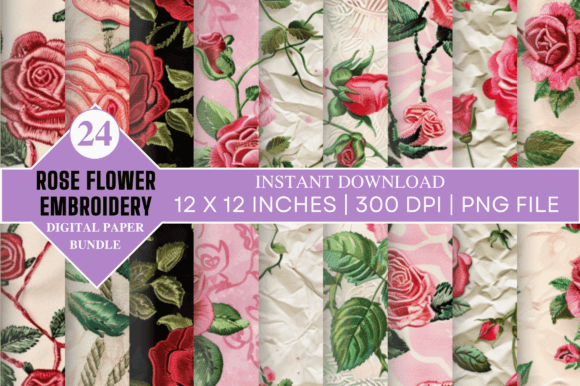
Rose Flower Embroidery Digital Paper
As an embroidery designer who spends weekends setting up booths at craft fairs and managing a busy handmade shop, I have learned that the difference between a sale and a missed opportunity often comes down to visual impact. When I first encountered the Rose Flower Embroidery Digital Paper, my initial reaction was one of cautious optimism. The description highlights these as watercolor backgrounds ideal for card design work over the holiday season, but in my experience, "backgrounds" can sometimes be misleading. A background that is too subtle gets lost on a crowded table, while one that is too busy distracts from the product itself. This review explores how this specific graphics asset performs when translated into physical craft fair products and whether it holds up under the scrutiny of real-world production.
First Impressions and Visual Appeal
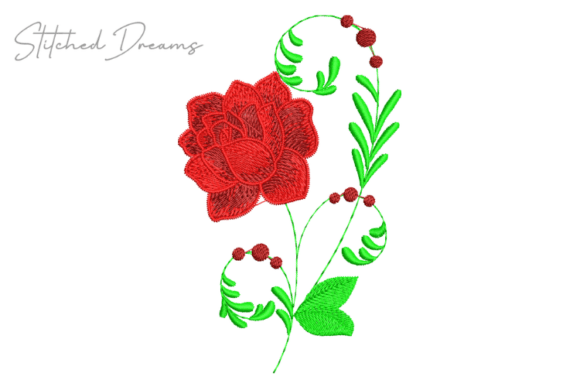
The term "watercolor" suggests a soft, blended aesthetic, which immediately signals elegance and femininity. For a booth display, this means the Rose Flower Embroidery Digital Paper will likely attract customers looking for premium, gift-worthy items rather than utilitarian goods. The rose motif is timeless, fitting comfortably into farmhouse, rustic, or modern decorative styles depending on the color palette used. However, because it is categorized as a background, there is a risk that the design might feel flat if not executed with care. In a digital environment, it looks beautiful; on fabric, it needs to pop. The key here is contrast. If you are using this for Etsy seller listings or physical prints, ensure the colors stand out against your chosen base material. It feels soft and minimal, which is excellent for boutique makers aiming for a high-end look, but it requires strategic placement to avoid looking like mere filler.
Product Application and Versatility
When planning a weekend market run, versatility is currency. I evaluated where this machine embroidery design would shine most effectively. Here is how it translates across various handmade products:
- Tote Bag Design: This is perhaps the strongest application. A large tote bag provides ample canvas for the watercolor effect to breathe. Placing the rose pattern as a focal point on the front panel allows the design to act as the main attraction, drawing eyes from across the aisle.
- Apron Embroidery: For kitchen-focused markets, this works well as a chest-level accent. The softness of the rose complements the practical nature of an apron, elevating it from a simple tool to a stylish accessory. It pairs beautifully with solid-colored denim or white cotton.
- Tea Towel Embroidery: Given the description’s mention of "card design work," this pattern lends itself perfectly to kitchen textiles. The vertical orientation of many tea towels allows the watercolor flow to mimic natural light or fabric drape, creating a sophisticated kitchen towel embroidery piece.
- Embroidered Patch: If the design includes clear boundaries, it can be digitized as a patch. These are highly sellable as accessories for caps or backpacks. However, the delicate nature of watercolor styles often struggles in small patches unless the stitch density is carefully managed.
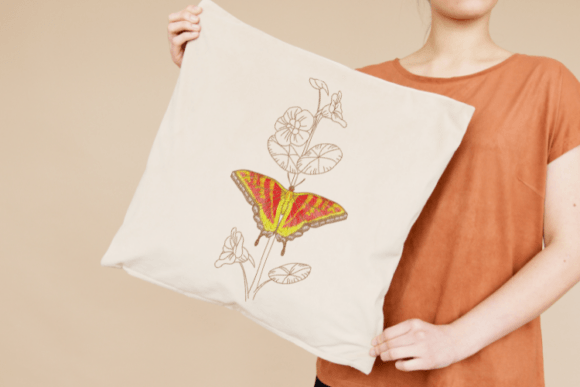
- Pillow Covers and Pouches: For home decor, this adds a touch of romance to living spaces. Small pouches benefit from the compact nature of the design, making them ideal for gifting during the holiday season mentioned in the product notes.
Production Practicality and Sales Strategy
From a business perspective, the Rose Flower Embroidery Digital Paper offers several advantages for batch production. The repetitive nature of floral patterns allows for efficient layout in the hoop, maximizing fabric usage. This is crucial for maintaining healthy margins on small shop products. Furthermore, the design photographs exceptionally well. The soft gradients of the watercolor style translate beautifully in online listings, reducing the need for heavy editing. Customers respond to imagery that feels authentic and artistic, and this design delivers that vibe instantly.
However, not all applications are created equal. While it works as a large focal design, caution is advised when scaling it down. Tiny details in watercolor-style graphics can become muddy if the resolution is low or if the stitching is too fine. For commercial embroidery, always prioritize clarity over complexity. A bold, simplified version of the rose pattern may sell better than a hyper-detailed rendition that loses definition on textured fabrics.
Critical Use Notes for Embroiderers
To ensure your finished product meets professional standards, consider these technical factors before running production batches:
- Stitch Density: Watercolor effects often rely on varied stitch directions to create color blending. Check the stitch density closely. Too much density on lightweight fabric can cause puckering, ruining the elegant look. Conversely, too little density may result in visible backing, breaking the illusion of the watercolor wash.
- Fabric Texture: The choice of fabric significantly impacts the final appearance. Smooth cottons or linens allow the design to render crisply. Rougher textures, like burlap or thick terrycloth, may obscure the subtle gradients. Always test on scrap fabric that matches your final product.
- Thread Colors: The success of this design hinges on thread selection. You must choose threads that mimic the translucent quality of watercolor. Synthetic threads often have a sheen that can clash with a matte watercolor aesthetic. Consider using cotton-blend threads for a more traditional, rustic feel.
- Hoop Size and Stability: Confirm the recommended hoop size for the design. Large designs require stable hooping techniques to prevent shifting. If you are embroidering on curved surfaces like caps, ensure the design has appropriate underlay stitches to anchor the fabric without distorting the shape.
- Stabilizer Choice: Using the right stabilizer is non-negotiable. For delicate backgrounds, a tear-away stabilizer might leave residue, while a cut-away could add unnecessary bulk. Test different options to find the balance between support and finish.
Final Verdict for Craft Fair Sellers
The Rose Flower Embroidery Digital Paper is a strong contender for sellers targeting the gift and home decor markets. Its strength lies in its ability to convey quality and artistry at a glance. It is not a loud, shouty design; it is a whisper that invites closer inspection. This makes it perfect for building brand consistency around themes of elegance, nature, and handmade care.
For Etsy sellers and digital artists, this asset serves as a versatile foundation. Whether you are creating printable mockups to showcase your services or producing physical goods, the design’s adaptability is its greatest asset. Just remember to respect the limitations of the medium. Avoid placing it on dark fabrics unless you use a dense underlay, and never skip the step of creating a real mockup to check spacing and scale.
Ultimately, this design rewards patience and precision. If you treat it with the care it deserves—selecting the right threads, testing on the correct fabric, and presenting it in a clean, well-lit booth or listing—it will undoubtedly enhance the perceived value of your craft fair products. It transforms simple items like tote bags and aprons into keepsakes, giving customers a compelling reason to choose your handmade goods over mass-produced alternatives. By focusing on the emotional connection the rose motif evokes, you turn a simple graphic into a memorable selling point.